Four hundred miles of canals, a tree on every seawall, and a hurricane season that tests all of them.
Tree removal, crane work on tight canal lots, palm and oak trimming, dead-pine and Australian-pine removal, diseased-palm removal, stump grinding, vacant-lot clearing with the owl burrows flagged first, hurricane prep and 24/7 storm response across Cape Coral and Lee County — by insured local crews with an ISA Certified Arborist on staff and a written price before a saw starts.
ISA Certified Arborist on staff · General liability and workers' comp · Free estimates · Owl, tortoise and mangrove rules checked on every job
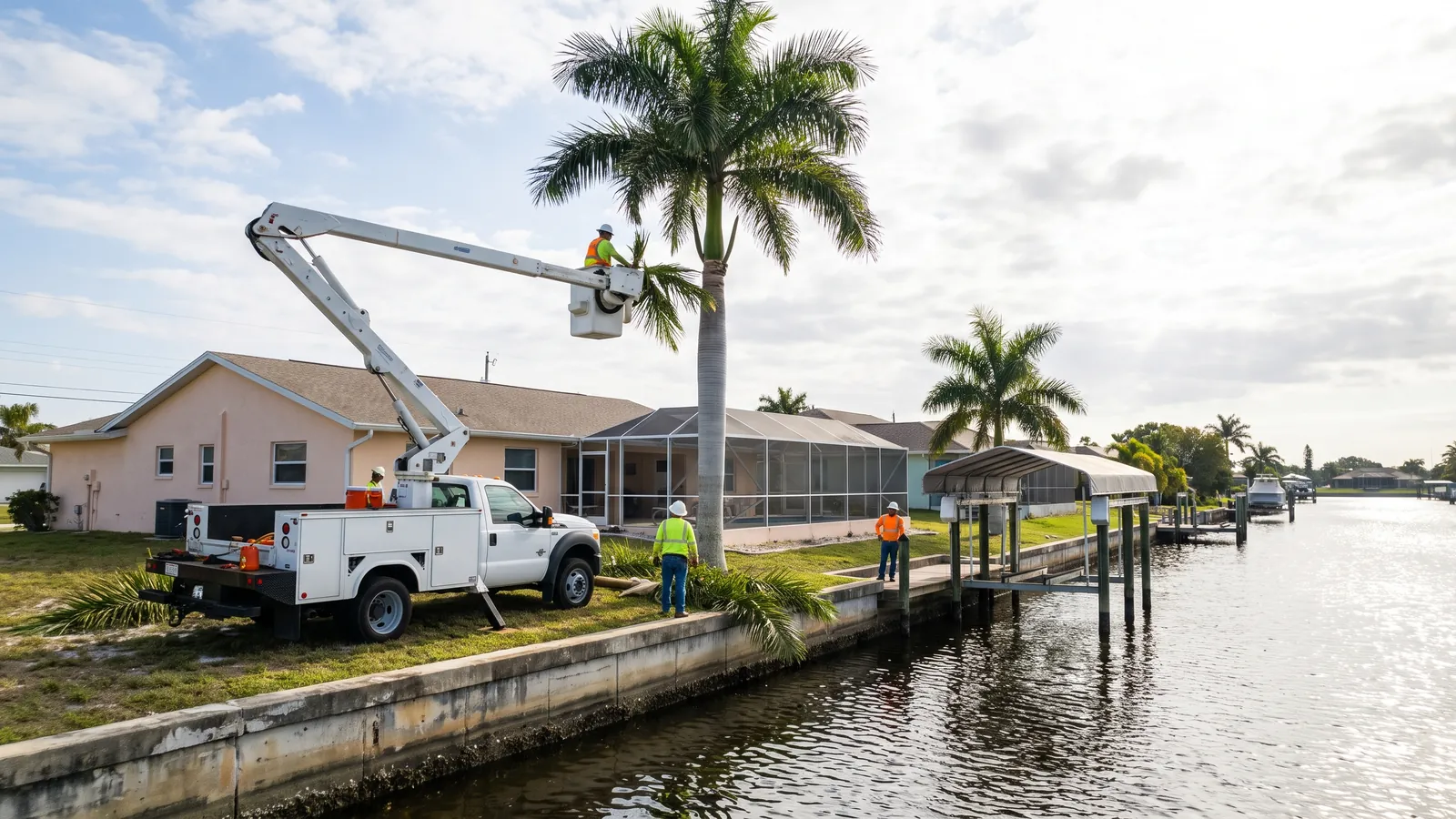
A tree company built for royal palms, slash pines and Australian pines on 80-by-125 lots
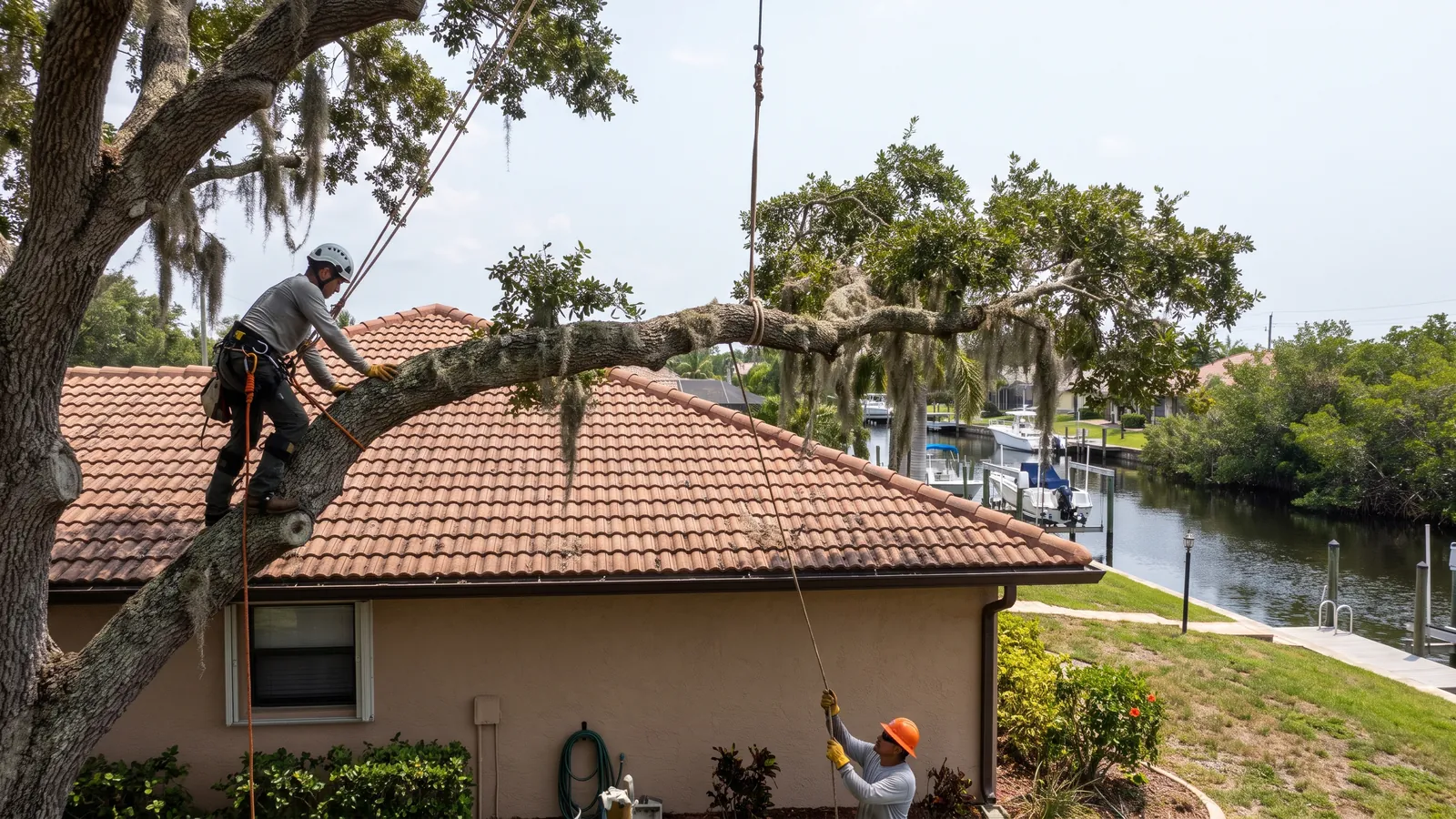
Tree removal
Oaks over the lanai, dead pines over the pool cage, mahoganies lifting the driveway — rigged down in pieces, chipped, hauled, raked.
Removal & pricing →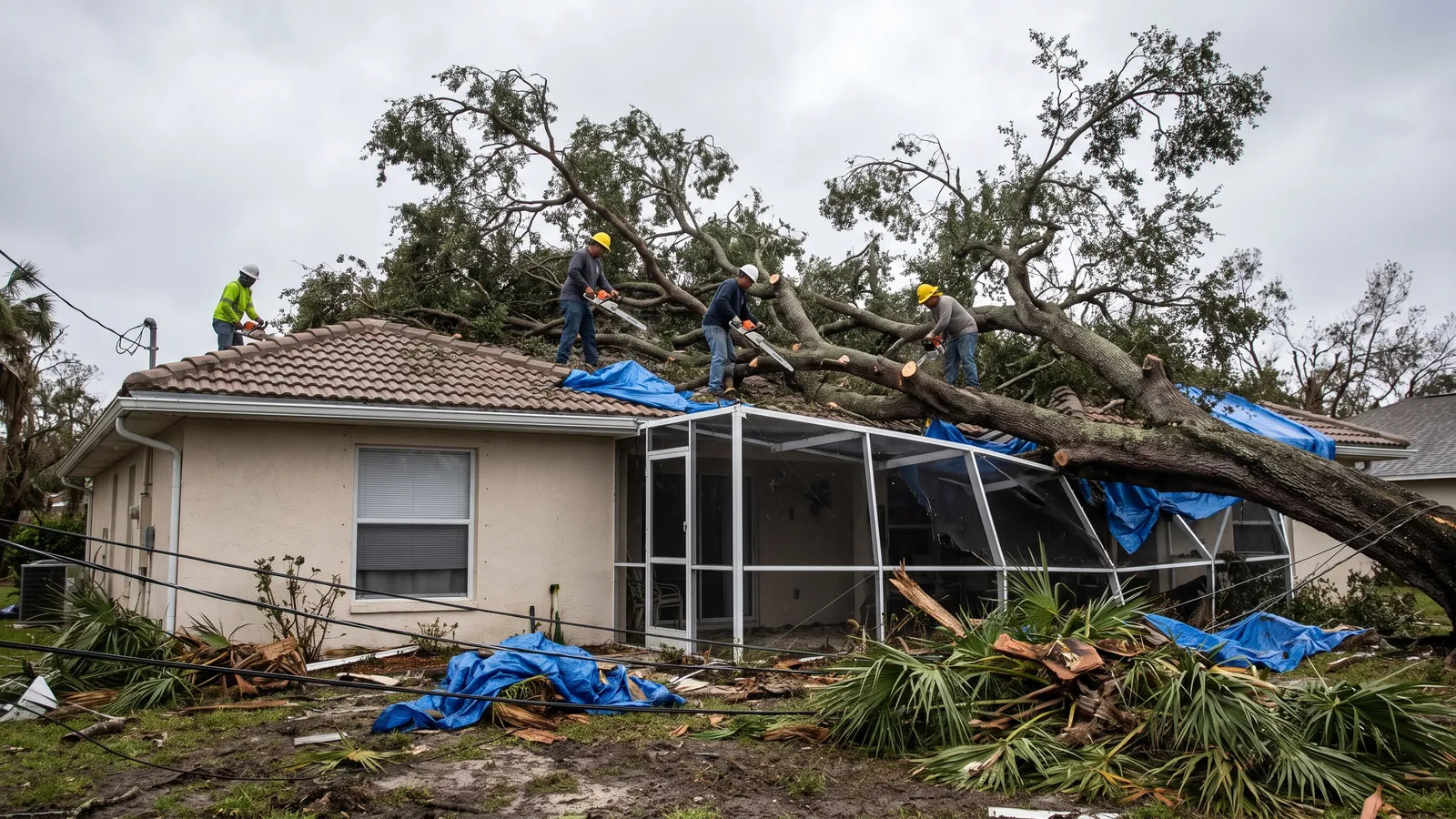
24/7 emergency & storm service
A tree through the roof, a pine across the driveway, a limb on the service drop — dispatched by priority any hour, paperwork afterward.
Emergency service →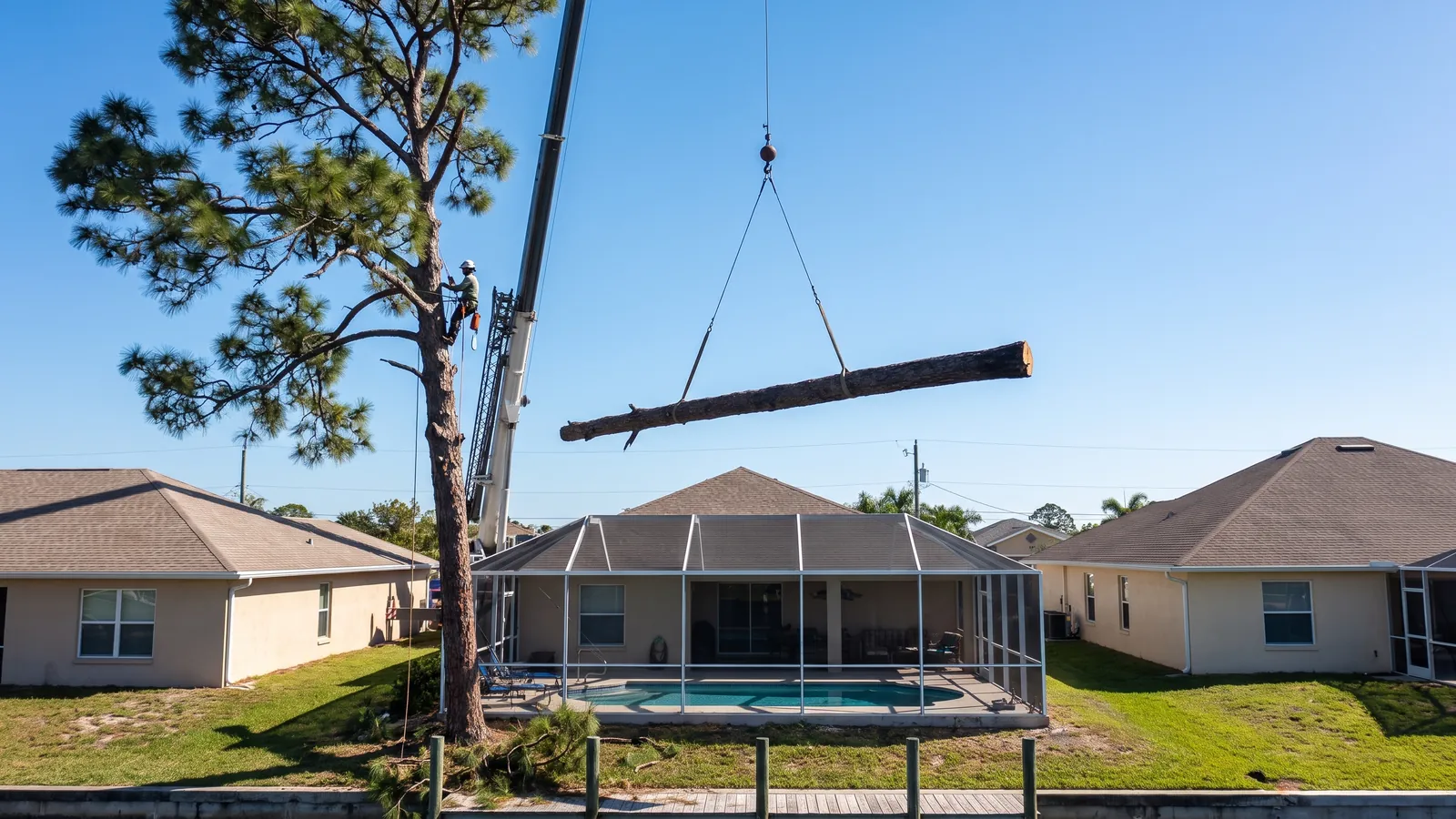
Crane tree removal
For the 70-foot pine between the house and the seawall with no drop zone: lifted out in sections over the roof, nothing touched.
Crane work →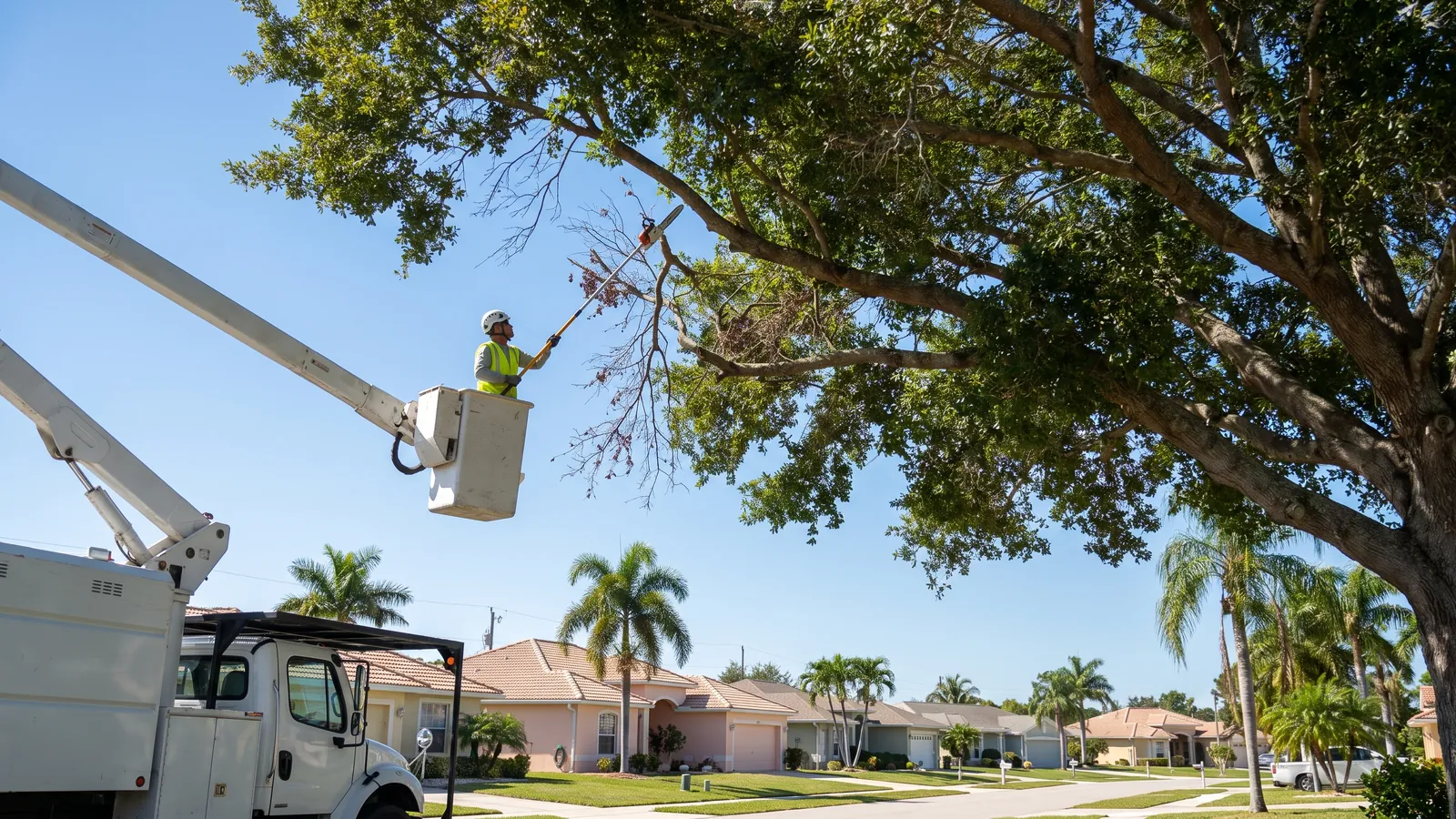
Tree trimming & pruning
Deadwooding, crown thinning, clearance from the roof and the LCEC service drop — ISA pruning standards, never hat-racking.
Trimming →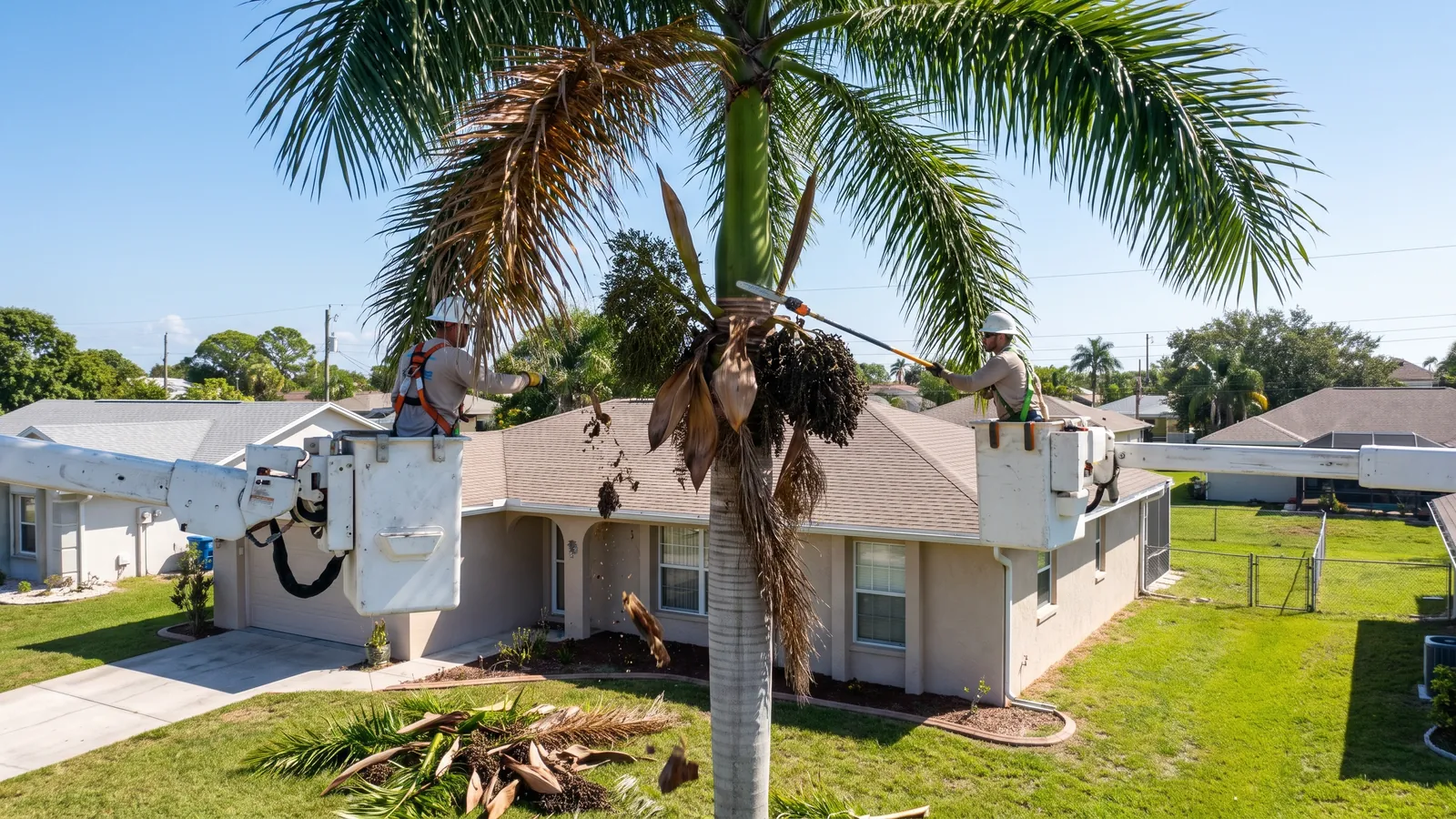
Palm trimming
Royals, queens, sabals, coconuts and foxtails — dead fronds and seed pods only, no hurricane cuts, before the season.
Palm trimming →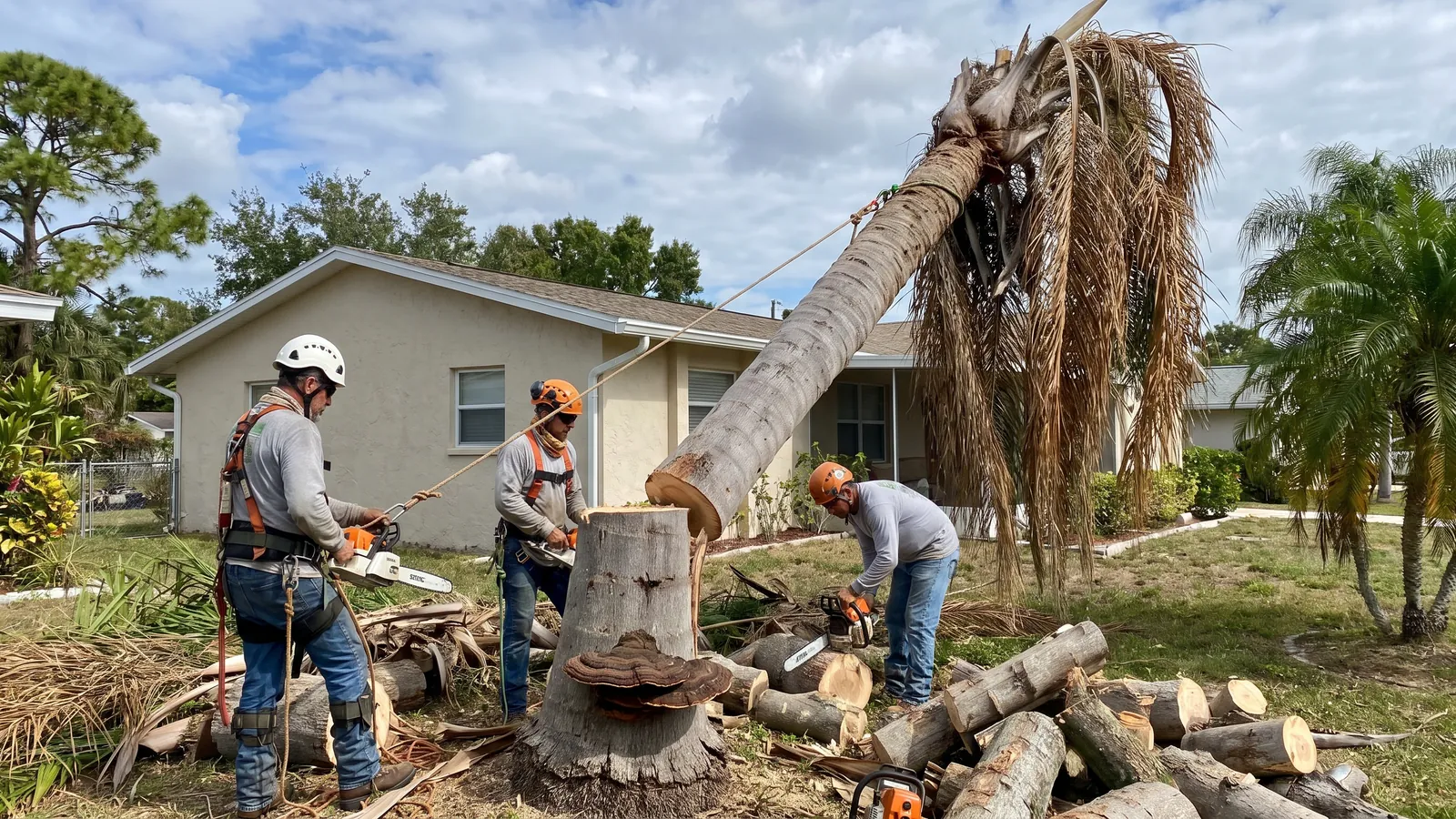
Palm removal & palm diseases
Ganoderma, lethal bronzing, lethal yellowing — the dying palm comes down and we tell you what not to replant in its place.
Palm removal →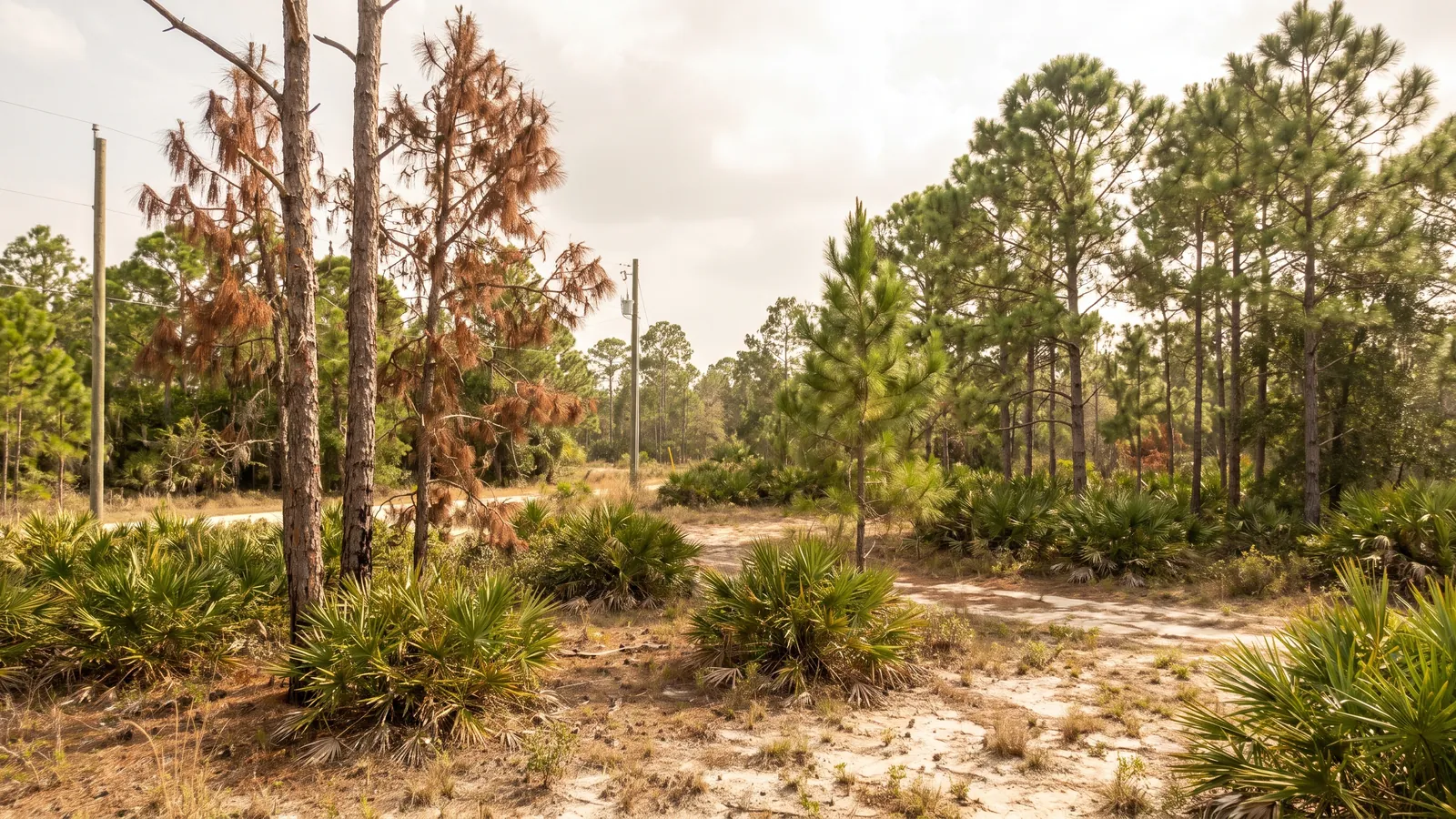
Dead slash pine removal
The pines Ian rocked loose are still dying three summers later. Red needles come down now, gray ones before the next storm.
Pine removal →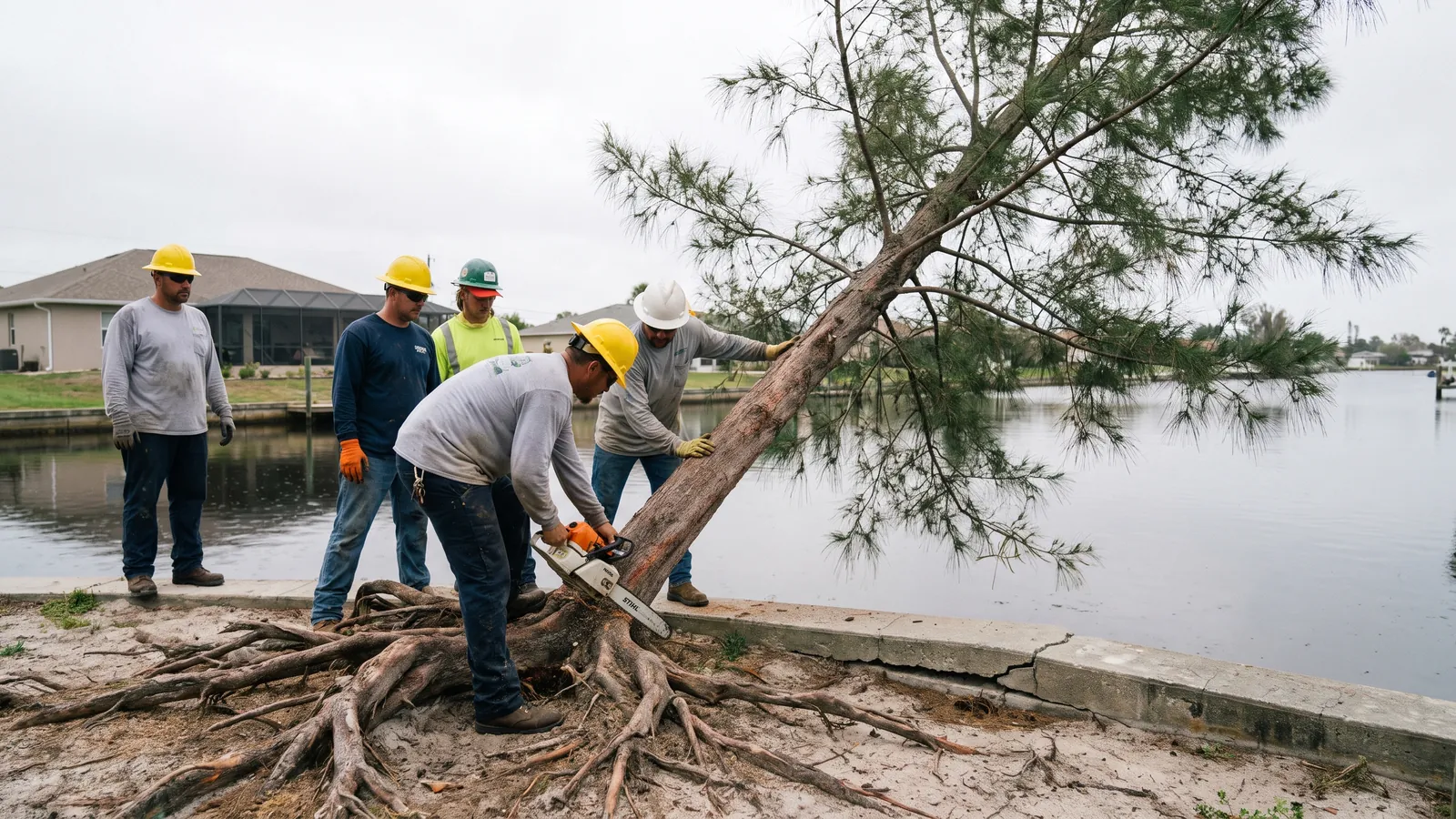
Australian pine & invasive removal
Australian pines, melaleuca, Brazilian pepper, earleaf acacia — the trees on the city's prohibited list, taken out before a storm does it for you.
Invasive removal →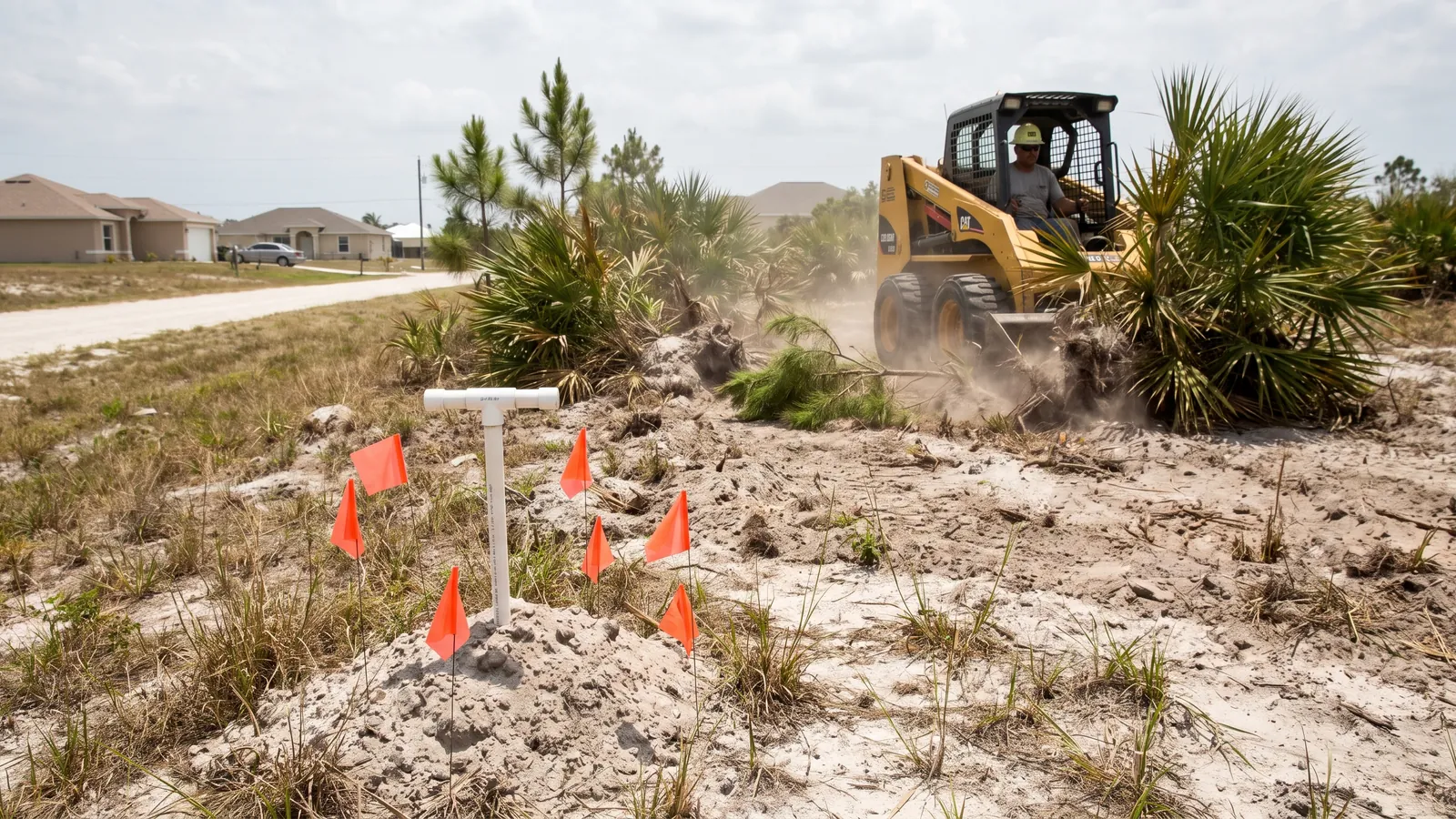
Vacant lot clearing
North Cape lots cleared for a build, with burrowing owl and gopher tortoise burrows flagged and buffered before a machine moves.
Lot clearing →Three numbers that decide most Cape Coral tree calls
Cape Coral is a 1957 subdivision the size of a county — 106 square miles, more than 400 miles of canals, a quarter of a million people, and a tree problem that looks nothing like the rest of Florida. These are the numbers that matter when you're deciding whether a tree stays, gets pruned or comes down.
City permits to remove a tree on your lot
Cape Coral does not require a permit to trim or remove trees on private residential property, and F.S. 163.045 bars any local permit or replanting when an ISA arborist documents the risk. What it does require: keep the trees the lot needed at its certificate of occupancy, keep the lot free of invasive exotics, and leave the owls, tortoises, eagles and mangroves alone without the state's say-so.
Burrowing owl buffer in nesting season
Ten feet around every active burrow the rest of the year, 33 feet from February 15 to July 10, with more than a thousand nesting pairs across the city — the most in Florida. Lot clearing, stump grinding and even driving a chipper onto a vacant lot starts with finding the burrows.
Ian's gust at the Cape Coral Yacht Club
September 28, 2022: 150-mph landfall at Cayo Costa, 140-mph gusts in the south Cape, six to nine feet of surge up the canals, and 1.9 million cubic yards of debris hauled off Cape Coral streets by December. The pines it loosened are still dying, and the next storm is the reason we thin canopies in May.
Four trees that keep our phone ringing
Slash pines in decline
Rocked loose by 140-mph gusts, soaked in saltwater in the south Cape, then hit by Ips engraver beetles. They go yellow, then red, then gray — and they fall toward whatever is heaviest below them.
Pine removal →Australian pines
Seventy to ninety feet tall on roots a foot deep. They went over by the thousand in Charley and Ian, they're on the city's prohibited list, and every one on a seawall is a roof waiting to happen.
Invasive removal →Ganoderma & lethal bronzing
A shelf conk at the base means Ganoderma and a palm dying from the inside; bronzed lower fronds and a dead spear leaf mean lethal bronzing. Neither has a cure. Both spread to the next palm.
Palm removal →Ficus, black olive & mahogany
The big shade trees planted in the original south Cape units are forty to sixty years old now: ficus roots in the seawall and the septic field, black olives dropping staining pods, mahoganies lifting the driveway.
Trimming →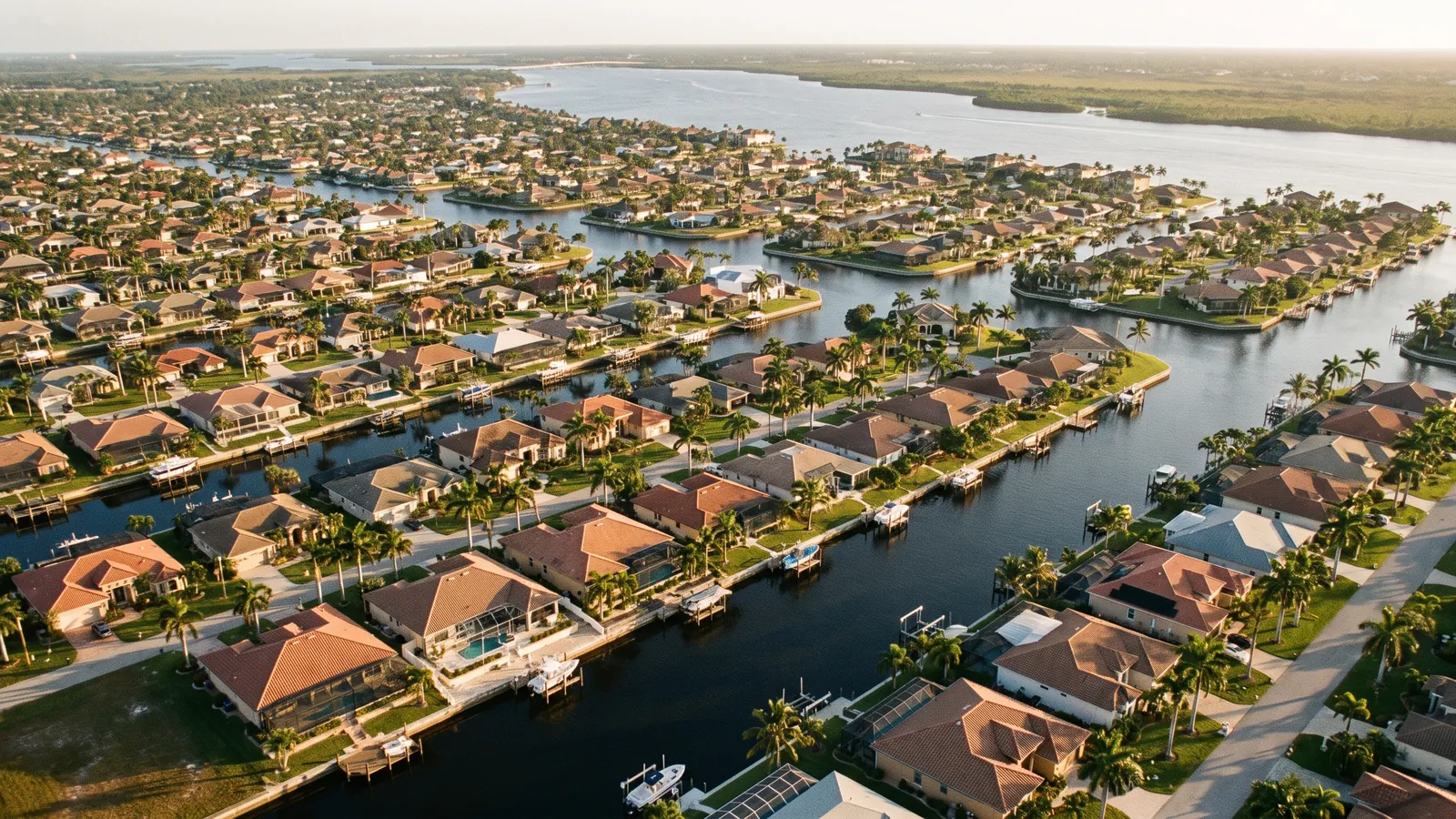
Cape Coral is a city of canals, seawalls and vacant lots, and every one of them changes how a tree comes down
The Rosen brothers started selling Cape Coral lots in 1957 and built the first eight houses in 1958 near what is now the Yacht Club. They dredged more than 400 miles of canals to make the fill, platted the whole peninsula into 80-by-125-foot lots, and left the trees for the buyers to plant. So the south Cape — Yacht Club, Pelican, the Caloosahatchee units — carries sixty-year-old ficus, black olives, mahoganies and Australian pines on lots where the house, the pool cage, the seawall and the neighbor's dock are all inside the canopy. The north Cape is the opposite: tens of thousands of vacant lots, slash pine and palmetto, burrowing owls and gopher tortoises, and the city expecting three-quarters of its new homes there over the next decade. Lot clearing in the north and tight rigging in the south are the two halves of our week.
Then the storms. Charley crossed the Cape in 2004 with 90-mph gusts; Wilma uprooted hundreds of trees in 2005; Irma put half the city in the dark in 2017; Ian came ashore at Cayo Costa on September 28, 2022 as a 150-mph Category 4, gusted to 140 at the Cape Coral Yacht Club, pushed six to nine feet of surge up the canals, and left 1.9 million cubic yards of debris on the city's streets; Milton knocked out power to 80,000 Cape Coral homes in October 2024 and spun tornadoes through Matlacha and Fort Myers. The metro also ranks third in the country for lightning. A tree company here plans for the next storm, not the last one.
So we do the boring things right: an ISA Certified Arborist looks at the tree before anyone sells you a removal, every crew carries general liability and workers' comp and you can see the certificate before they climb, we rig over roofs and seawalls instead of dropping, we call Sunshine 811 before we grind a stump, we flag every owl and tortoise burrow before a machine moves, we send mangroves to a state-registered trimmer, and we answer the phone the morning after the storm.
Four steps, no surprises
Call or send the form
A leaning pine, a palm gone bronze, an Australian pine over the seawall, a limb on the lanai — tell us what you're seeing. We answer around the clock.
An estimator walks the lot
Usually within a day or two. They look at the lean, the root flare, decay, the drop zone, the canal access and the wildlife — and tell you whether the tree really needs to come down.
Written, itemized price
Removal, trimming, crane, stump grinding, haul-off — every line, plus whether any state or county rule applies. No deposit until you approve and we schedule.
Done in a day, raked like we weren't there
Most residential jobs are a day. Everything chipped and hauled, the lawn raked, the seawall and pool cage untouched, the stump ground if you asked, photos sent the same evening.
From the Yacht Club and Cape Harbour to Burnt Store Road, and across the river to Fort Myers
We're across Cape Coral every week: the southwest Cape around Cape Harbour, Tarpon Point, Pelican and Rose Garden; the southeast Cape from the Yacht Club up through the original Caloosahatchee units; the northwest Cape along Burnt Store Road where the new lots are being cleared; and the northeast Cape around Del Prado, Diplomat and Hancock Bridge Parkway.
Beyond the city we cover Fort Myers, North Fort Myers, Lehigh Acres, Pine Island and Matlacha, Fort Myers Beach, Sanibel and Captiva, Bonita Springs and Estero, San Carlos Park, Iona and McGregor, and Punta Gorda and Burnt Store across the Charlotte County line — all of Lee County and the edges of its neighbors.
See the full service area →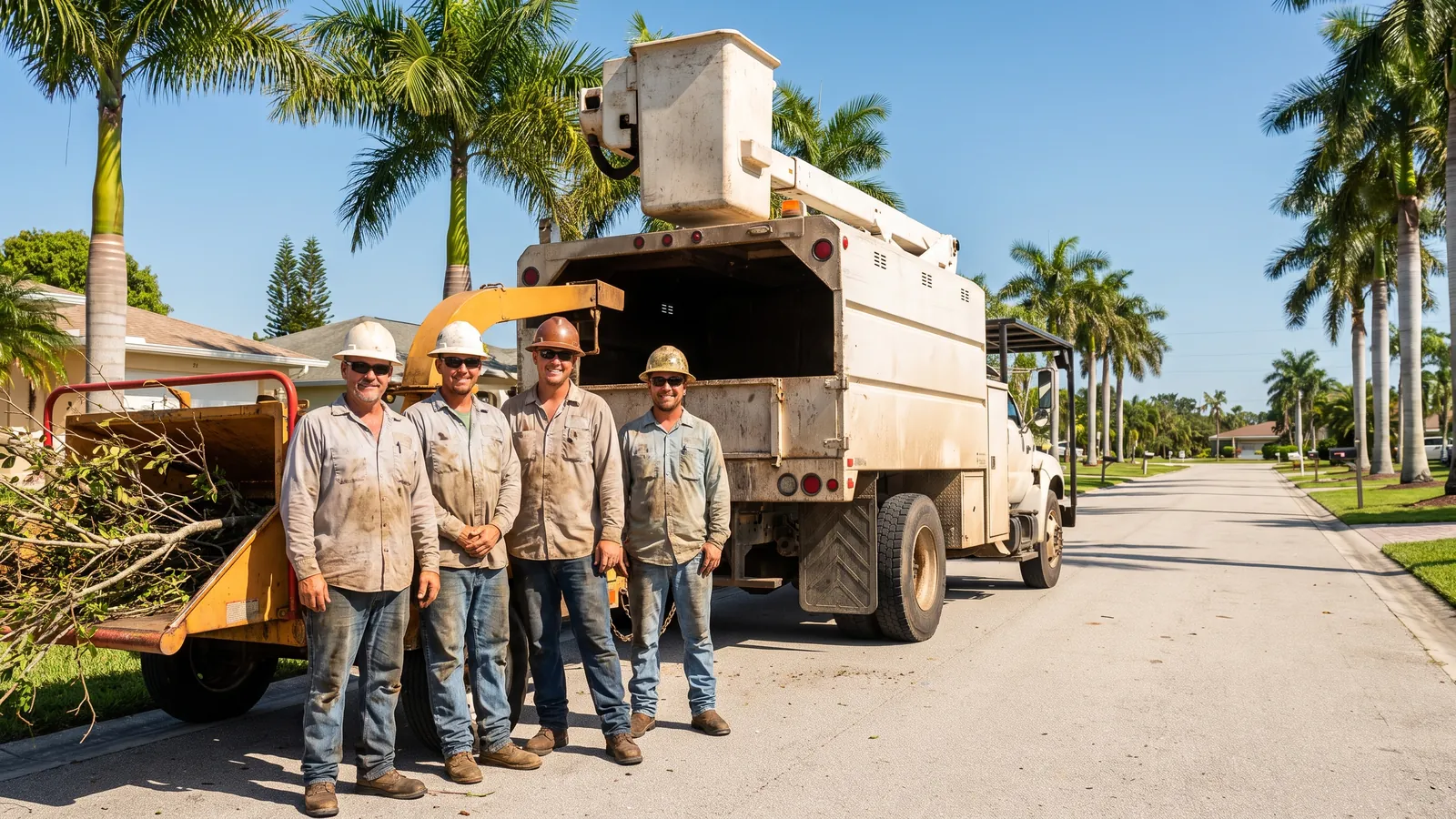
Questions Cape Coral homeowners ask us
How much does tree removal cost in Cape Coral?
In 2026 a typical Cape Coral removal runs about $550 to $750, with most jobs between $220 and $1,500. By height: a small tree under 25 feet is $200–$500, a 25-to-50-footer $500–$1,200, a 50-to-75-foot slash pine or live oak $1,200–$2,500, and anything over 75 feet $2,000–$4,000. Palms are $150–$1,200 depending on height and species, Australian pines on a canal lot $800–$3,500, and a crane job on a lot with no access $2,500–$7,000. Stump grinding is $3–$5 per inch of diameter with a $150 minimum. Every price we give is in writing after an estimator has walked the lot.
Do I need a permit to remove a tree in Cape Coral?
On your own single-family lot, no — the City of Cape Coral does not require a permit to trim or remove trees on private residential property, and Florida Statute 163.045 bars any local permit, fee or replacement requirement when an ISA Certified Arborist documents that a tree is an unacceptable risk. The exceptions are the things people forget: mangroves along the canal (state law, Professional Mangrove Trimmer required above 10 feet), burrowing owl burrows and gopher tortoise burrows on the lot (FWC buffers and permits), bald eagle nests, and the city's rule that a finished lot keeps its required trees and stays free of invasive exotics. Fort Myers, Sanibel, Fort Myers Beach and unincorporated Lee County all have their own permits, and we check before we cut.
Why are so many pines dying since Ian?
Hurricane Ian's 140-mph gusts rocked the slash pines hard enough to loosen their shallow roots and crack the wood inside the trunk — foresters call it ring shake — and the saltwater that flooded the south Cape finished many of them off. A rocked pine looks fine for months, then goes yellow and red-brown the following summer, and once Ips engraver beetles move into the stressed wood there is no treatment. Red needles means the tree is dead and should come down before it drops limbs or falls; gray, bare branches mean it has been dead for a while and is only getting more dangerous.
What about the burrowing owls on my lot?
Cape Coral has more than a thousand nesting pairs of burrowing owls, the largest population in Florida, and they are a state-threatened species. Nothing can be mowed, cleared, driven over or dug within 10 feet of an active burrow, and from February 15 to July 10 that buffer grows to 33 feet. If a burrow sits where the house has to go, the owner applies to FWC for a permit and the city asks for a starter burrow elsewhere on the lot. We flag every burrow before a machine touches a vacant lot, and we clear around them.
Is my palm sick or just hungry?
Both happen, and they look alike. A queen palm or Canary Island date palm with a hard shelf-fungus conk at the base of the trunk has Ganoderma butt rot and is dying from the inside; it needs to come down and the stump area should not be replanted with a palm. A sabal or queen palm whose oldest fronds go bronze from the bottom up while the spear leaf dies may have lethal bronzing, which has no cure. A palm with yellowing new growth and frizzled tips is usually short on manganese or potassium and can be fed. We look before we quote a removal.
Do you really answer at night?
24 hours a day, every day, including the morning after a hurricane. If a tree is through the lanai at 2 AM, call — a person picks up, a crew is dispatched by priority, and the paperwork happens after the tree is off the house.