When a palm is dying from the inside, it comes down before it comes down on its own
Ganoderma conks at the base, bronzed lower fronds and a dead spear, a crown that snapped in the storm — the palm comes down in sections, the trunk is hauled, and we tell you what not to plant in its place.
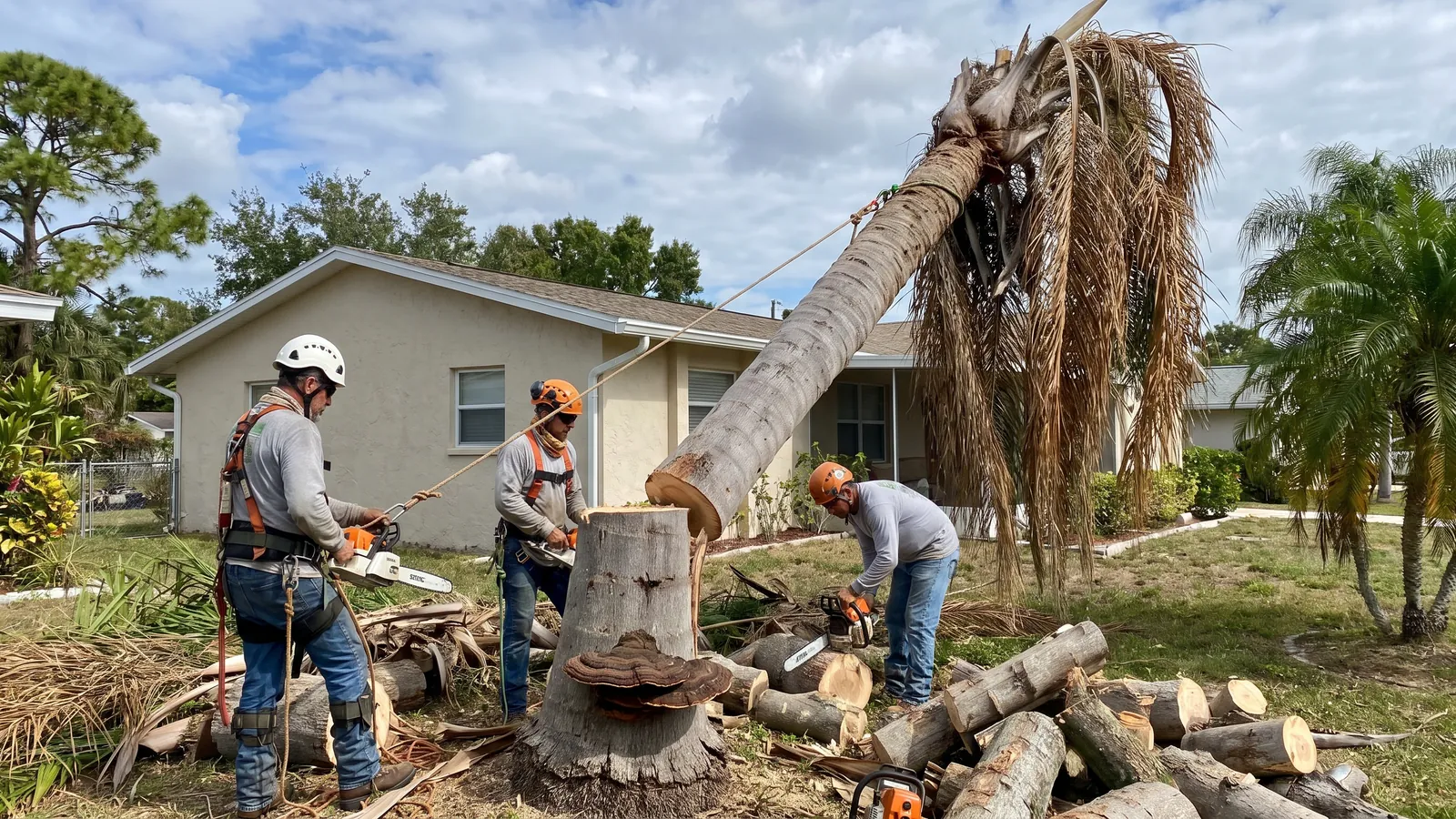
Three diseases are killing palms across Lee County, and none of them can be cured. Ganoderma butt rot is a fungus that rots the lower trunk from the inside; the first visible sign is a hard, shelf-like conk at the base, and by then the palm's structure is already gone. It kills every palm species, queens and Canary Island dates fastest, and it stays in the soil — the lower four or five feet of trunk have to be hauled to the landfill, not chipped, and no palm should be planted in that spot again. Lethal bronzing is a bacterium-like phytoplasma carried by a planthopper; it kills sabal, queen, Bismarck and Phoenix (date) palms within months, and infected palms should be removed quickly so the planthoppers don't carry it to the neighbors. Lethal yellowing does the same to coconuts, with the nuts dropping first and the crown collapsing within six months.
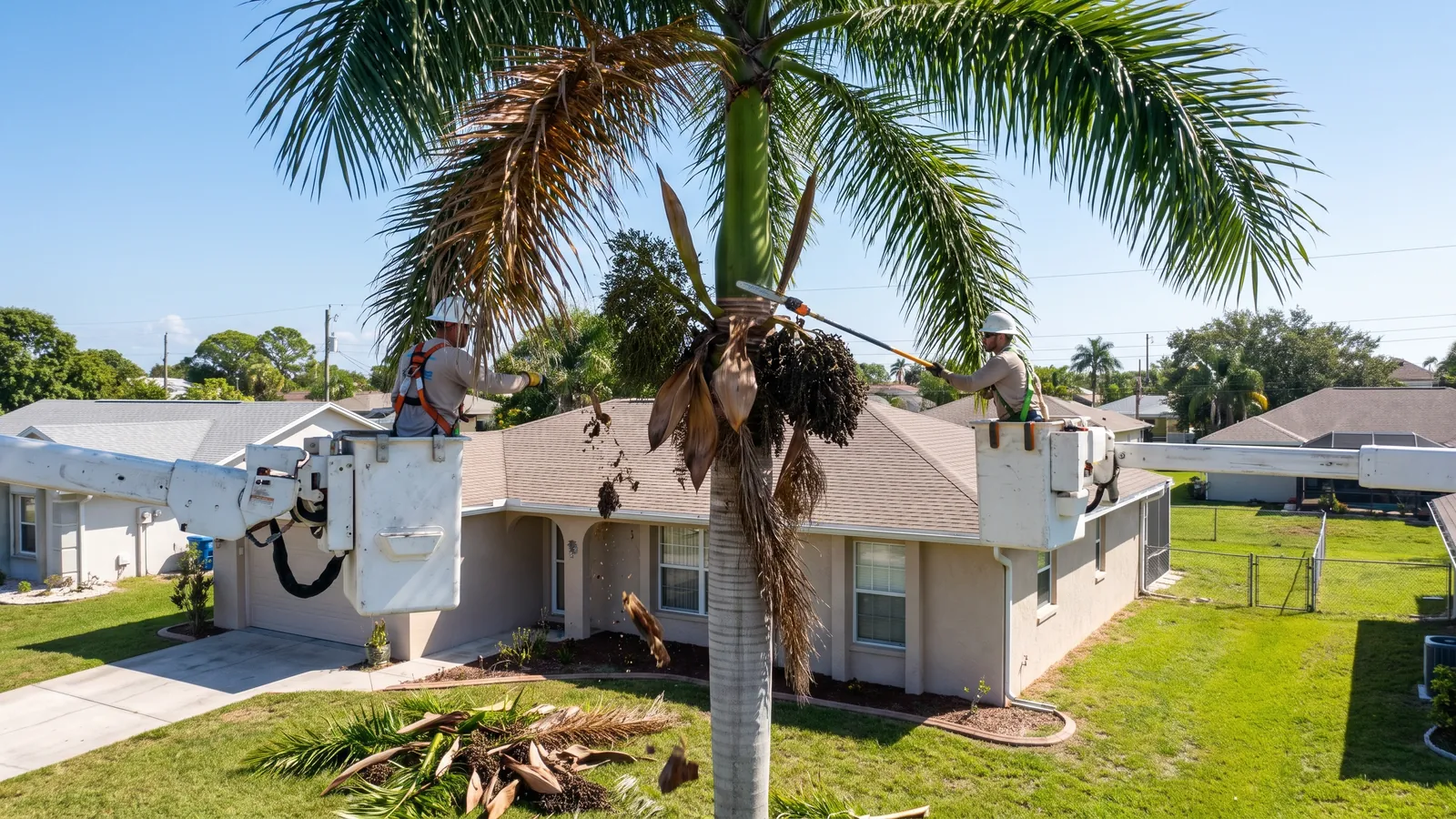
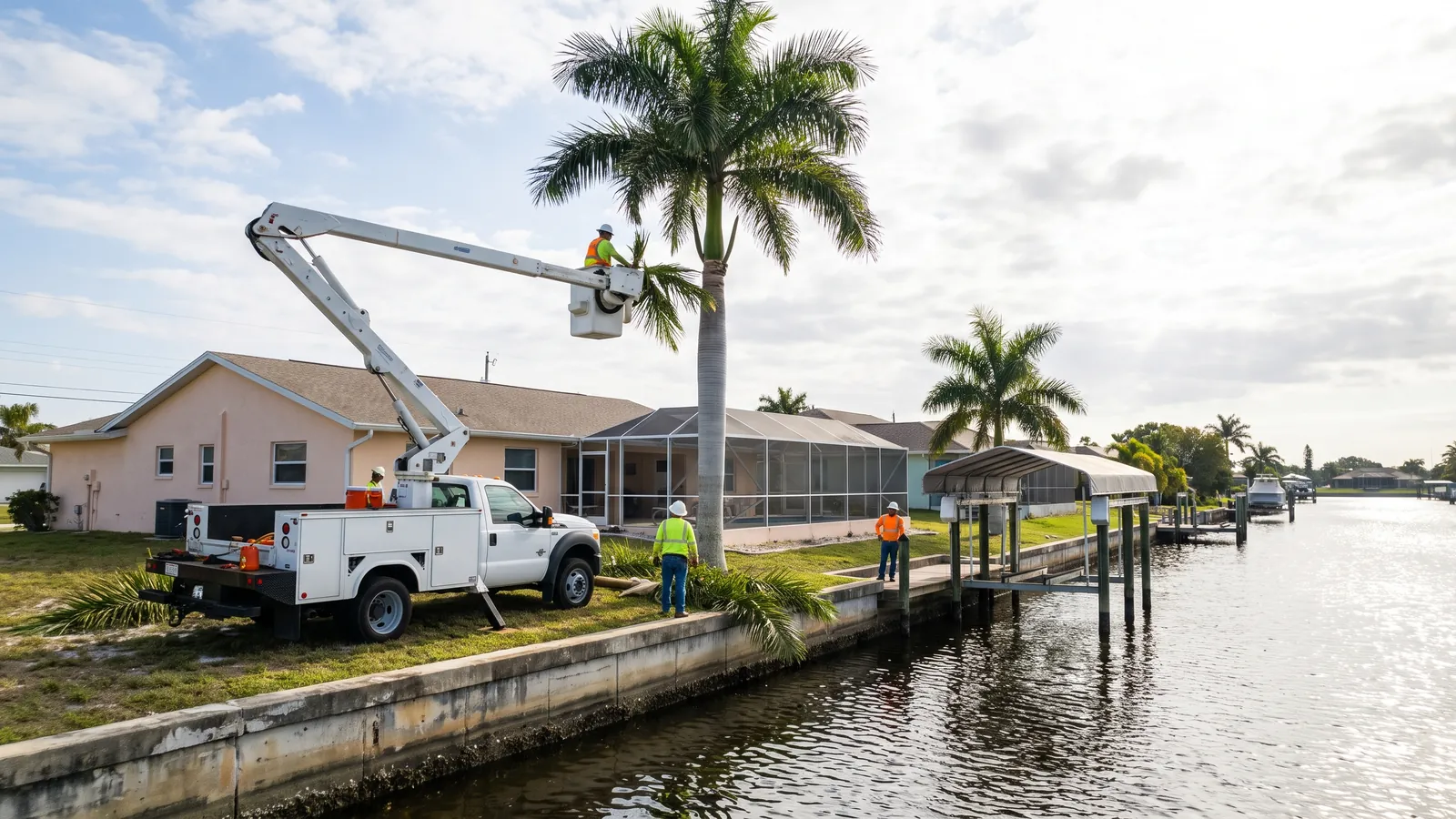
Then there is the storm damage. Ian snapped royal palms at the crown and took the heads off coconuts all along the south Cape canals, and a headless palm is simply a pole that will rot and fall. Palm removal is faster than tree removal — no limbs to rig — but a seventy-foot royal weighs several tons and comes down in trunk sections lowered on a rope or lifted by a crane, never dropped across the seawall. Stump grinding for a healthy palm is straightforward; for a Ganoderma palm the stump and root mass go to the landfill with the trunk.
What's included
Disease diagnosis
Our arborist tells you whether it's Ganoderma, lethal bronzing, lethal yellowing, a nutrient deficiency or storm damage — and whether the neighbors' palms are at risk.
Sectioned, not dropped
Trunk sections lowered on a rope or lifted by crane over the cage, the seawall and the dock.
Ganoderma handling
Lower trunk and stump hauled to the landfill, tools disinfected, no palm replanted in the spot.
Lethal bronzing
Infected palms removed promptly; preventive oxytetracycline injections suggested for susceptible neighbors.
Storm-snapped palms
Headless royals and coconuts removed before the trunk rots and falls.
Replanting advice
What will live in that spot in Cape Coral's fill soil, and what won't.
Palm removal cost in Cape Coral, FL
| Job | Typical price | Notes |
|---|---|---|
| Queen, foxtail or Christmas palm | $150 – $400 | Per palm |
| Sabal palm | $200 – $500 | Heavy trunk; sectioned |
| Royal palm, 40–70 ft | $500 – $1,200 | Several tons; rope or crane |
| Coconut palm | $300 – $800 | Canal-front access |
| Canary Island date palm | $600 – $1,500 | Huge crown and trunk mass |
| Ganoderma palm with stump haul-off | + $150 – $400 | Trunk base and root mass to the landfill, no grinding |
| Palm stump grinding (healthy palm) | $100 – $250 | Fibrous root mass ground below grade |
These are 2026 Lee County ranges so you can budget. Your written price is itemized — the climb or bucket work, rigging, chipping and haul-off, stump grinding, crane time, the wildlife and mangrove check — and good for 30 days.
Recent work
Questions we get about palm removal
How do I know if my palm has Ganoderma?
Look at the base of the trunk for a hard, half-moon shelf — white at first, then brown on top with a white edge. That conk means the fungus has already rotted the inside of the lower trunk, and the palm can snap there in a storm. There's no fungicide. Remove it, haul the stump and lower trunk, and don't replant a palm in that spot.
What are the signs of lethal bronzing?
On a sabal, queen or date palm, the oldest fronds turn bronze or reddish-brown from the tips inward, the fruit drops early, and then the spear leaf — the newest, unopened frond — dies. Once the spear is dead the palm is gone. Confirmation is a lab test; prevention for neighboring palms is antibiotic injection every few months.
Can a palm that lost its head in the hurricane grow back?
No. A palm has one growing point, the bud at the top. If the crown snapped off below the bud, the palm is dead and the trunk will rot and fall within a year or two. If the crown is still attached and the bud survived, new fronds will push in a few months and the palm can be saved.
Do you need a permit to remove a palm in Cape Coral?
No, not on a residential lot. If the palm was one of the trees the lot needed at its certificate of occupancy, the city expects the count to be kept up, so we'll tell you what to plant in its place.
Will you take the palm trunk away?
Always. Palm trunk is fibrous, heavy, and useless as firewood or mulch; the city's curbside pickup won't take it. Hauling is in every price, and Ganoderma material goes to the landfill.