Trimming that makes the tree stronger for the next storm, not weaker
Deadwood out, the crown thinned so wind passes through, clearance from the roof and the service drop, and the big shade trees of the south Cape pruned the way they should have been thirty years ago.
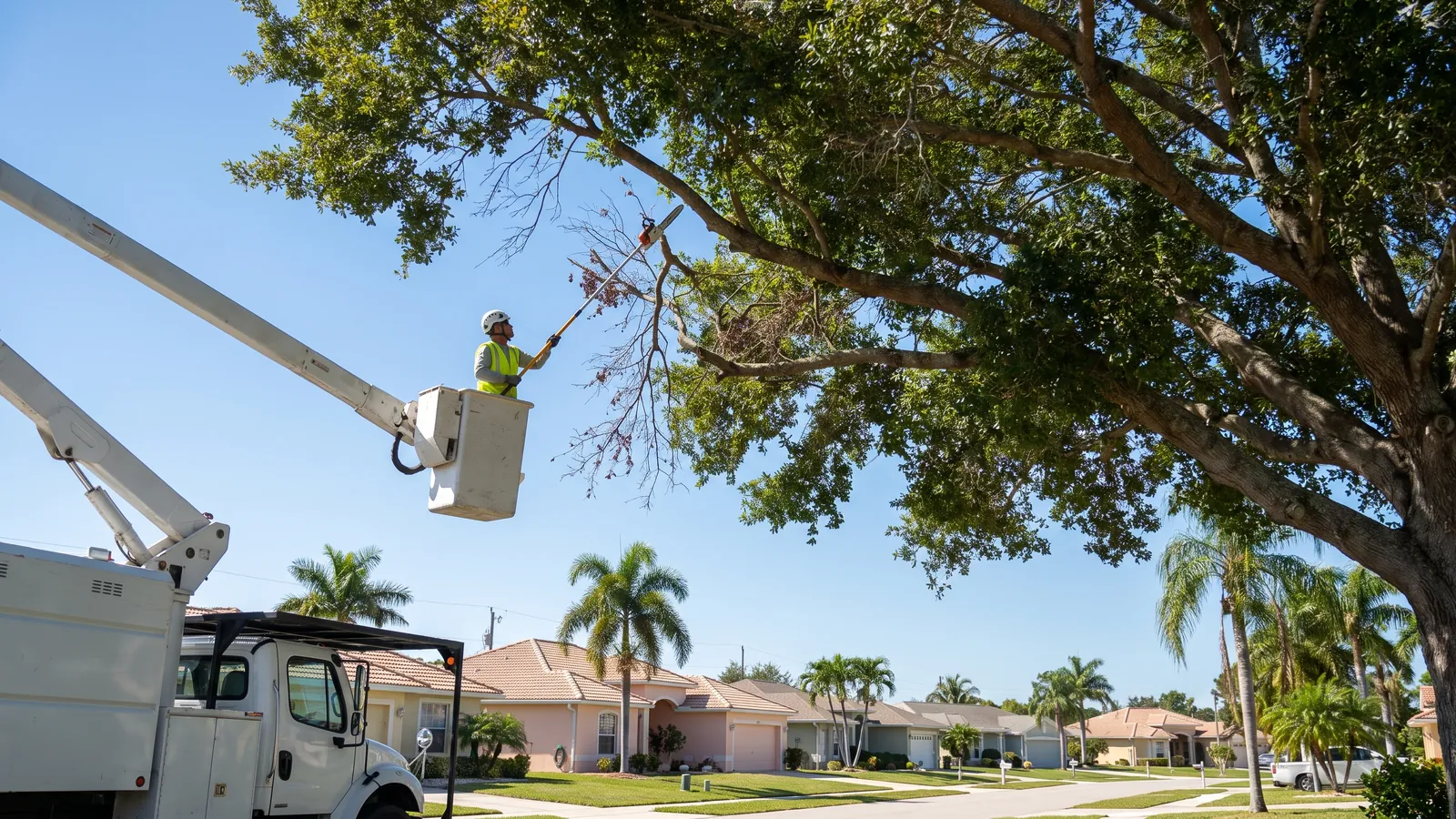
The original units of Cape Coral — the Yacht Club, Pelican, the streets off Del Prado and Cape Coral Parkway — were planted in the 1960s and 70s with the fast, big shade trees of the day: weeping ficus and Cuban laurel, black olive, mahogany, Norfolk Island pine, and the Australian pines that are now on the city's prohibited list. Fifty years on they're the biggest trees in the city, and most of them have never been structurally pruned. The ficus have surface roots in the seawall cap and the driveway, the black olives drop tannin-staining pods onto pool decks, the mahoganies have grown codominant trunks with bark trapped between them, and all of them carry deadwood that will land on a roof in the next thunderstorm.
Good pruning takes out the dead, the crossing and the rubbing limbs, thins the interior so wind moves through the canopy instead of pushing on it, raises the crown off the roof and the pool cage, and keeps a seven-foot clearance from the LCEC service drop — all to ANSI A300 standards, which means proper cuts at the branch collar and never more than a quarter of the live canopy in one visit. What it never means is hat-racking: the flat-topped, stubbed "hurricane cut" some crews still sell. It's banned on protected trees in most of South Florida, it's prohibited on Sanibel, and it produces exactly the weak, fast, poorly attached regrowth that fails in the next storm.
What's included
Deadwooding
Every dead limb big enough to hurt something comes out of the canopy before the summer storms.
Crown thinning
Selective interior cuts so wind passes through; never more than a quarter of the live canopy at once.
Clearance
Raised off the roof, the pool cage and the driveway; seven feet from the service drop, with the utility handling anything near the primary lines.
Structural pruning
Codominant trunks, included bark and crossing limbs corrected on the ficus, mahoganies and oaks while the cuts are still small.
No hat-racking
ANSI A300 cuts at the collar; no topping, no lion-tailing, no flat tops.
Cleanup
Chipped and hauled, lawn raked, pool deck blown off.
Tree trimming cost in Cape Coral, FL
| Job | Typical price | Notes |
|---|---|---|
| Small tree or ornamental | $150 – $400 | Crape myrtle, young mahogany, seagrape, bottlebrush |
| Medium shade tree, 25–45 ft | $400 – $900 | Black olive, mahogany, live oak, ficus |
| Large tree, 45 ft and up | $900 – $2,000 | Big ficus, mature oaks, Norfolk Island pines |
| Service-drop and roof clearance | $250 – $700 | Per tree; primary-line work goes to LCEC or FPL |
| Structural pruning, young trees | $100 – $300 | Per tree; cheapest pruning you'll ever buy |
| Hourly crew rate | $130 – $180 / hour | Two-person crew with bucket truck and chipper |
These are 2026 Lee County ranges so you can budget. Your written price is itemized — the climb or bucket work, rigging, chipping and haul-off, stump grinding, crane time, the wildlife and mangrove check — and good for 30 days.
Recent work
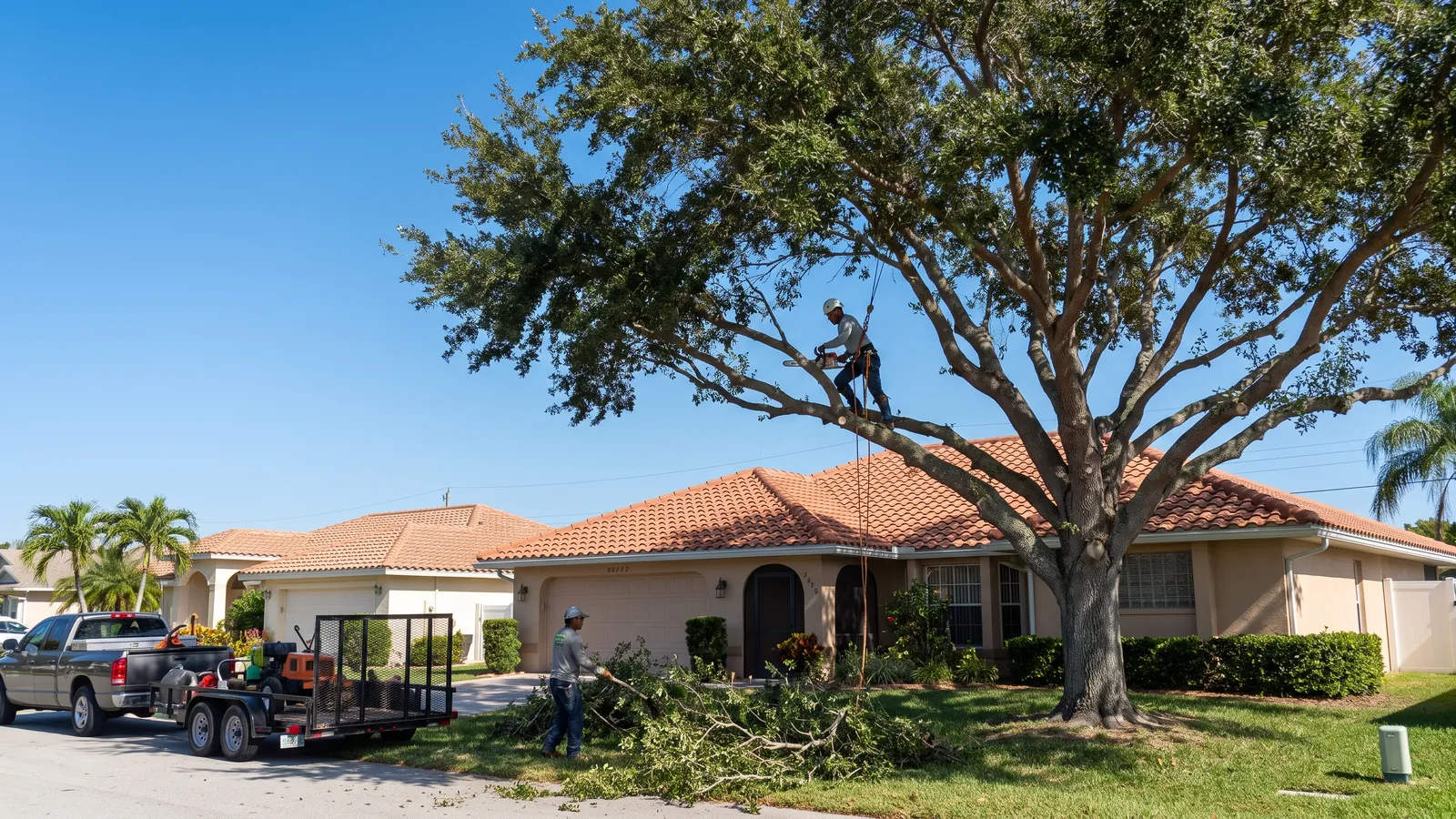
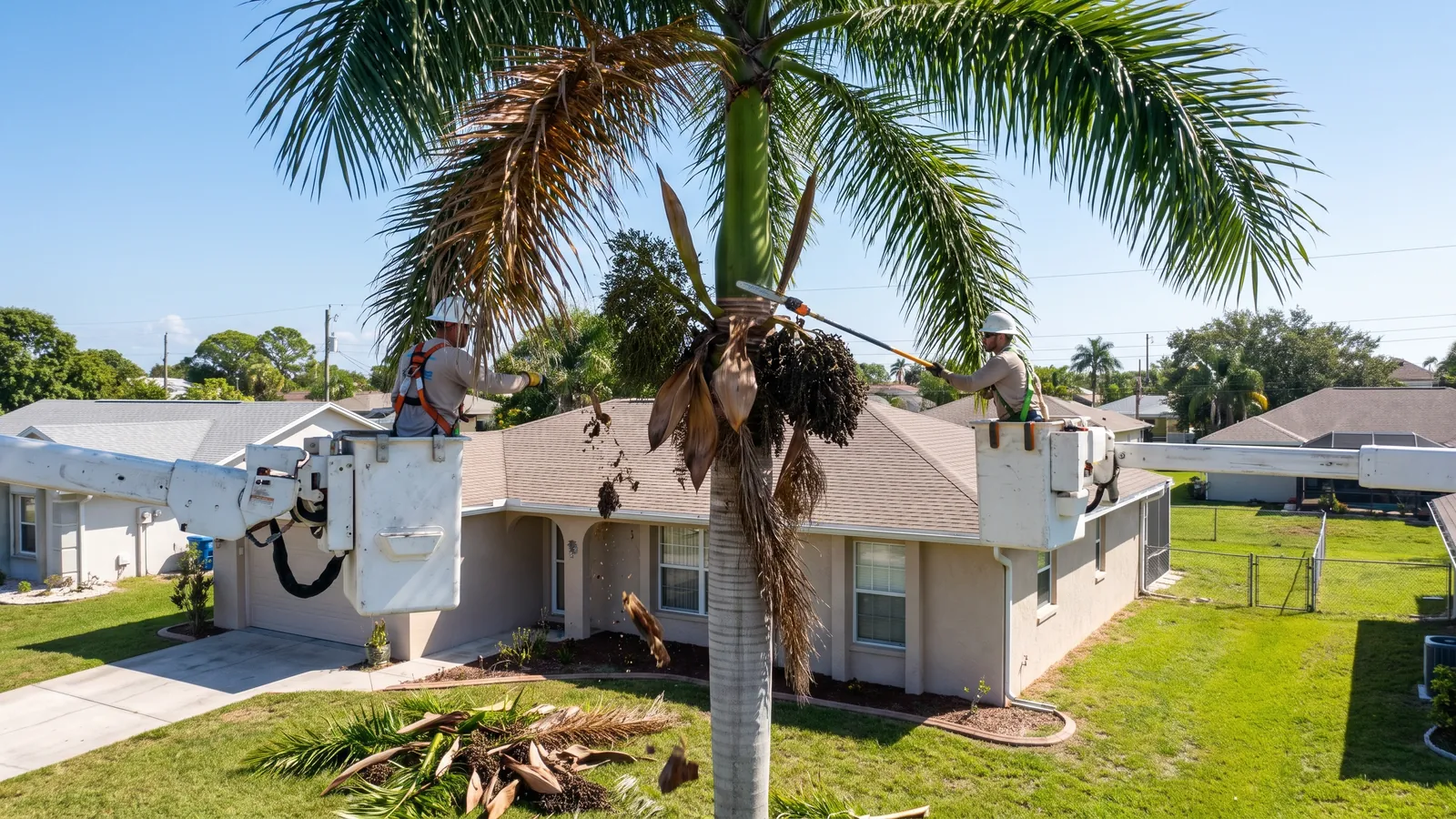
Questions we get about tree trimming
Can you top my tree so it's shorter for hurricanes?
No, and you shouldn't want it. Topping (hat-racking) removes the canopy the tree uses to feed itself and triggers a flush of weakly attached sprouts that break off in the next storm. The pruning that helps in a hurricane is thinning and reduction — fewer, well-spaced limbs that let the wind through — and that's what we do.
When is the best time to trim in Cape Coral?
Late winter to early May for storm prep, so the tree is thinned before the season and the cuts have time to close. Ficus and black olive can be pruned almost any time; avoid heavy pruning of anything in the first weeks after a hurricane while the tree is recovering.
Who trims the trees near the power lines?
LCEC trims around its primary distribution lines on a cycle, and FPL does the same in Fort Myers and Bonita. The service drop from the pole to your house is yours — we clear it, and we coordinate with the utility for anything within reach of the primaries.
My ficus roots are in the seawall. Will trimming help?
Trimming reduces the crown, not the roots. Ficus roots will keep going into the seawall cap, the pool deck and the drain field no matter how the top is cut; Lee County's own horticulture extension says not to plant them near any of that. We'll give you a straight answer about whether this is a prune or a removal.
Is there a city permit for trimming?
No. Cape Coral doesn't permit trimming or removal on private residential property. Sanibel does — pruning more than 25 percent of a protected native tree needs a permit there — and we handle it.